

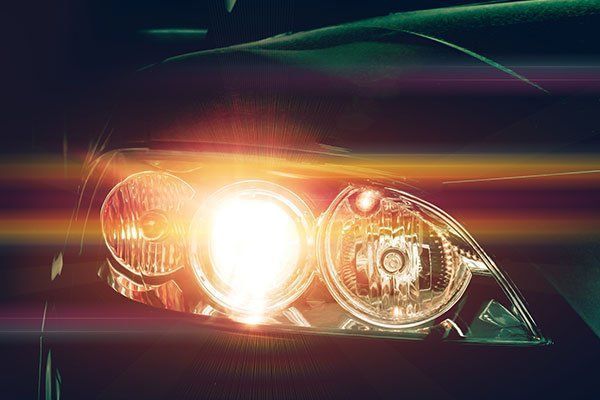
4 Car Headlight Warning Signs and What They Mean

July 14, 2020

Headlights not only serve as essential safety devices by permitting visibility in a wide range of conditions, but they can also alert you to various kinds of trouble within the vehicle's complex electrical system. Take a look at these four common headlight warning signs and the potential problems that they may either create or indicate.


1. Yellowing Headlights


If you've driven the same car for many years, you may find that you don't get as much illumination from your headlights as you once did. In many cases, the culprit lies in a yellowish haze that gradually overtakes the lamps' plastic covers, not unlike the way cataracts form a hazy barrier to vision in the aging human eye.


This haze develops after years of exposure to ultraviolet radiation, flying debris, road chemicals, and water vapor. Yellowed headlights may only deliver a fraction of their rated light output. This reduction limits your visibility in foul weather or nighttime driving while also making your car that much less visible to other drivers.


A combination of professional sanding, polishing, clear coat application, and measures to prevent condensation can often restore headlight brightness. However, you may also choose to replace very old headlights (which will fail sooner or later) with LED headlamps capable of delivering up to 30,000 hours of illumination.


2. Low Headlight Power


Weak headlight performance doesn't always stem from yellowing of their exteriors. Headlights can also fall out of alignment with each other, either in the course of previous lamp changes or as a natural process over time. Misaligned headlights can drastically reduce your visibility and reaction time in low-light situations.


Fortunately, your auto technician can adjust headlight alignment with ease. This procedure involves observing the headlights' beam overlap pattern at a specific distance from a wall, turning screws or bolts until the beams attain proper alignment. Different manufacturers may recommend different evaluation distances.


If you struggle with dim headlights despite straight alignment and an absence of yellow haze, then you may have a wiring problem. For example, the ground connector that attaches your headlight wires to the car's body may need cleaning to remove corrosion. You might also have a bad power feed connection or headlight switch.


Sometimes the insides of bulbs themselves can develop a brown coating, deposited there by the filaments that glow to create light. In such cases, replacing the bulb should solve the problem.


3. Flickering Headlights


Headlights that flicker on and off may originate at any of several points in the system, including defects or deterioration in the bulbs. Pay attention to how and when you see the problem occur. If you notice the problem mainly when driving over bumps or potholes, you probably have a loose or failing wiring connector.


If your headlights only flicker when you run your car stereo, then the stereo system may draw so much power that the headlights have too little to work with. Excessive power draw that affects your headlights may also come from other components, from the windshield wiper motors to the cabin heating system.


An electrical component reaching the end of its useful life can cause headlights to flicker. You may need to have your alternator or various electromagnetic switches checked out to trace and fix the problem.


4. No Headlight Response


Completely dead headlights may indicate a bulb failure, especially if only one headlight has died. If a headlight will work on low-beam but not high-beam or vice versa, it may need replacement of only the bulb responsible for that setting. You might also need to replace the beam selector switch.


If you lose both headlights at the same time, suspect a ground connector, wire, fuse, relay, or switch failure. If the car won't even start, then you need to have your battery or alternator checked.


Letcher Bros. Auto Repair can get your headlights working as they should. Contact us for a free estimate.
An auto repair shop.
January 26, 2026
Find out how to select reliable auto repair services in Richmond, CA, with insights from Letcher Bros Auto Repair. Read our blog and make a smart choice!
A technician is running an auto diagnostic.
January 24, 2026
Unlock the benefits of auto diagnostic services in Berkeley, CA. Letcher Bros Auto Repair shows you how precise diagnosis prevents costly repairs; read now!
Young mechanic using computer for accurate car diagnostics in a busy repair shop.
October 7, 2025
Auto diagnostic services for Richmond, CA, drivers. Call Letcher Bros Auto Repair at 510-724-2335 for expert help today.
Mechanic using scan tool on car engine in shop for accurate automotive diagnostic services.
July 24, 2025
Need Auto Diagnostic Services in Berkeley, CA? Avoid guesswork and costly repairs with accurate diagnostics from Letcher Bros. Call us at (510) 724-2335.
A mechanic performs automotive repair on a car in a garage, surrounded by tools and equipment.
May 26, 2025
Notice car trouble? Contact Letcher Bros. at (510) 232-2485 for trusted automotive repair in Richmond, CA. Fast, fair, and reliable service.
mechanic from Letcher Bros Auto Repair working on an automotive repair in Richmond, CA
March 28, 2025
Learn why regular automotive maintenance is essential for Richmond residents. Keep your vehicle safe and efficient with Letcher Bros Auto Repair.
A person fixing a tire l Automotive Repair Richmond CA, Letcher Bros Auto Repair
January 30, 2025
Learn how to save money on auto repairs in Richmond, CA without sacrificing quality. Follow these tips for preventative maintenance, addressing small issues early, and working with a trusted repair shop like Letcher Bros.
Mechanics from Letcher Bros Auto Repair performing auto diagnostic services in Crockett, CA, ensurin
January 8, 2025
Improve your car’s performance with auto diagnostic services in Crockett, CA. Contact Letcher Bros at (510) 724-2335 to keep your vehicle running smoothly!
A man is pumping gas into a car at a gas station.
May 3, 2023
Uncover what lean fuel codes mean, why they trigger your check engine light, and how addressing them protects your engine.
April 6, 2023
Have you seen a wet patch underneath your car every time you park it? Before you make conclusions, it's essential to determine if you require expert help to fix the car problem. Whether it's your first car or you have several of them, identifying the leak might be difficult. For this reason, you should learn how to diagnose leaks and make an informed decision. This piece will help you understand the common types of car fluid leaks. Oil Seepage Oil leakage is a common problem you may face as you use a vehicle. The leakage forms a yellow or dark-brown patch under the car after parking it for some time. There are numerous reasons why a car may have an oil leak issue. Maybe you have a damaged oil filter, faulty oil seal, or damaged engine gasket. Issues like a defective or lost cap, holes in the oil pan, and valve gasket problems may also cause seepage. Fixing this seepage issue is affordable, so consider asking the mechanic for assistance. You may prevent this issue by prioritizing car service and oil changes. Ensure the oil you buy is from a good brand. 2. Brake Fluid Leakage Compared to an oil outflow, brake fluid leaks are somewhat challenging to diagnose. You will see a light-brown fluid close to the wheels or brake pads. If you notice this leak, do not hesitate to call your auto mechanic shop for emergency assistance. Brake fluids may leak if your vehicle has wobbly bleeder valves or worn brake pads, or when brake calipers, the rubber hose, or the master or wheel cylinders leak. Because this leak problem is severe, you should stop driving immediately after seeing the fluid signs on the wheels. 3. Power Steering Leakage Never ignore a power steering leak problem, as it indicates that your auto needs repair immediately. You will see this brown or red color leak towards the front part of the automobile. Its drip is thin and may occur after the seals and o-rings lose form because of old age. Older autos or those with significant mileage are more prone to this steering leak problem. You'll know there's a leak if turning the wheel when riding becomes challenging. This usually means the levels of the fluid are low and can't be pressurized. Sometimes the vehicle can also make a sound after turning the wheel. 4. Water Leak Another common fluid that might leak is water. Water leakages are odorless and clear and may appear under the car. The primary cause is the car's AC system. A mechanic should confirm that the clear leak is just water. If it is just water, no further action is necessary. 5. Antifreeze Leakage This is one of the unique leaks you may see under the vehicle. You will see a sticky substance that's pink, yellow, green, and a whole host of other colors. While this leak issue may not be an emergency, you should remedy it soon. The leaks occur when the radiator has a hole, or the sealing gasket is damaged. A blown head gasket or corroded radiator tubes may also cause this issue. So do not ignore the leakage, as it can cause severe complications like engine overheating or failure. You should take auto leaks seriously if you want your vehicle to function optimally without compromising your safety. Once you see wet patches under the car or on the wheels, do not hesitate to inform your mechanic and book an appointment. At Letcher Bros. Auto Repair, we can help diagnose and fix your auto leakage issues, so call us for professional help.